

MARISCA PICHETTE: Insectoid whimsy in spite of the horrors
Author feature — Issue #11
It’s not all doom and gloom at the anarchist sci-fi journal specifically dedicated to how the world is going to hell.
Sometimes we take a break from stories about human-spaceship sex monstrosities and poems on industrial abuses, and instead bring readers pieces about what’s good and worth nurturing in this world.
Marisca Pichette’s poem “fritillary frigate” is one such work. It’s a sweet adventure undertaken by two friends; it toes the line between science fiction and fairy tale. A dreamlike journey that feels like a childhood story — the kind you make up during playtime about the objects and creatures you encounter.
In a timeline where space travel has become synonymous with billionaire dilettantism and large-scale waste, sometimes it’s worth revisiting alternatives — worlds where it doesn’t have to be this way. Pichette’s travelers are guided by wonder, friendship, and a love of the natural world.
Find the poem below, and keep reading for our breakdown and a whimsical glossary.
Marisca Pichette is a queer author of more than three hundred pieces of short fiction and poetry, appearing in Strange Horizons, Clarkesworld, Vastarien, The Deadlands, The Magazine of Fantasy & Science Fiction, Fantasy Magazine, Asimov's, Nightmare Magazine, and many others. Her poetry collection, Rivers in Your Skin, Sirens in Your Hair, was a finalist for the Bram Stoker and Elgin Awards. Their eco-horror novella, Every Dark Cloud, is out now from Ghost Orchid Press. (You can find a catalogue of their poetry here.)
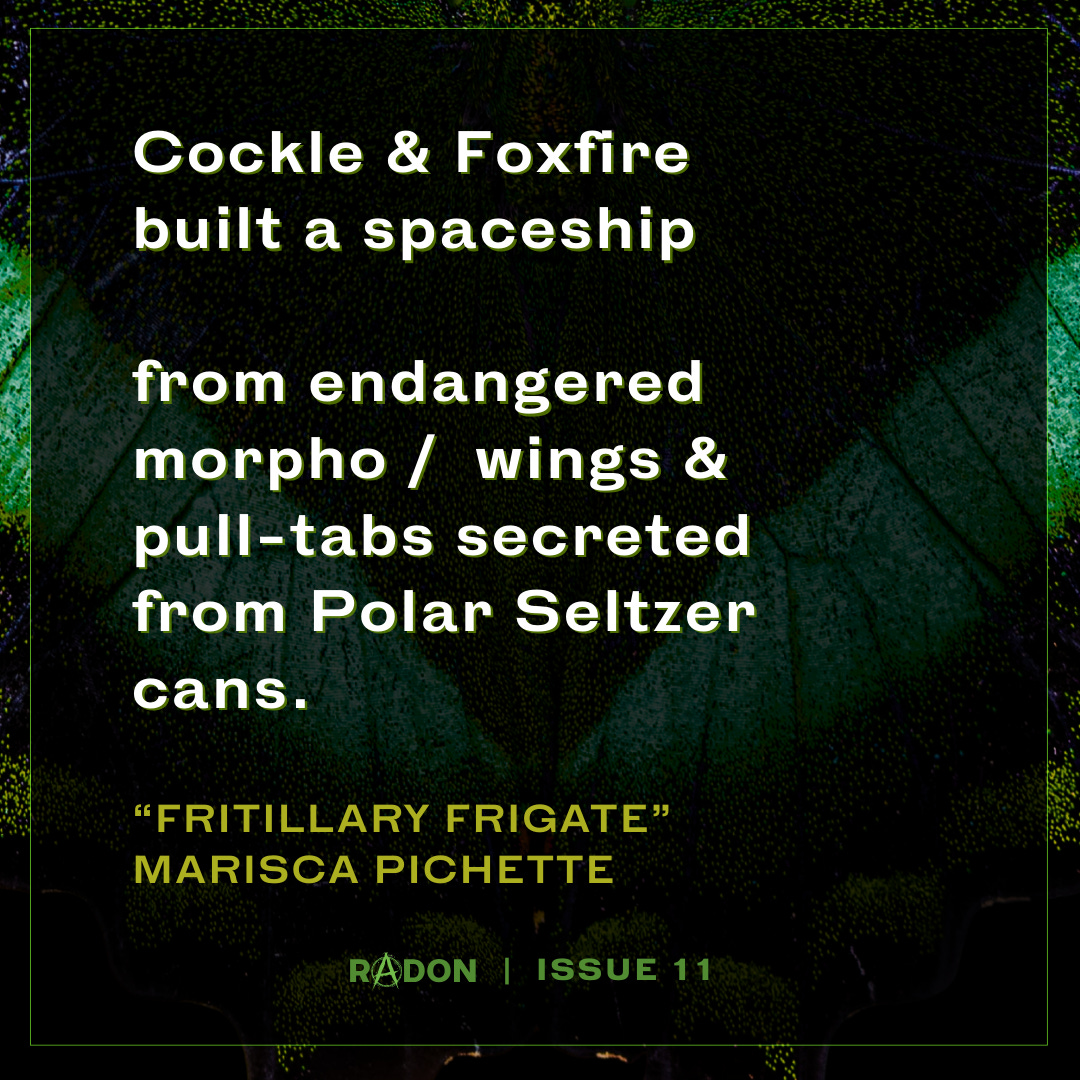
From the beginning of the poem, “Cockle & Foxfire / built a spaceship…”, Pichette leans into mystery and mood rather than explanation. We don’t know who or what Cockle and Foxfire are — they seem to be small, since they’re building with such tiny materials.
The ampersand is also a great element — using “&” instead of “and” is a nice way to visually represent the poem’s emphasis on found objects and collage. Not everything has to be uniform.
A gossamer glossary
Many of our editors learned new words from this poem. Interestingly, many of the terms have double referents in the natural world.
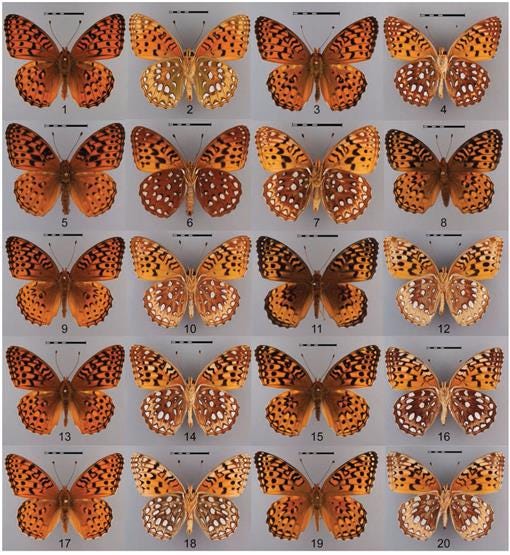
Fritillary: Referring to a type of butterfly, usually with orange spotted wings; or to a kind of flower with bell-shaped petals.
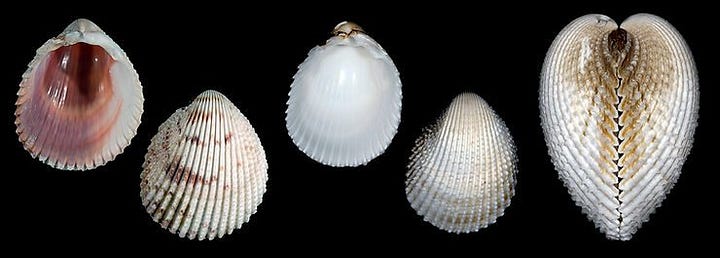
Cockle: Either a type of plant/flowers or a mollusk.

Cockles Foxfire: OED defines this as “phosphorescent light emitted by decaying timber,” caused by a bioluminescent mycelium; Merriam Webster says it can also refer to other glowing fungi.


These innocent double meanings make the poem a wonderful one to re-read and re-imagine. That you can find something new each time underscores the themes of tinkering and repurposing.
The pastoral wonder of the piece and its emphasis on finding little treasures in a starry world made our team think of the classic song “Kiss Me” by Sixpence None the Richer, which makes for a good accompaniment to the read.
Back to our regularly-scheduled brooding soon.
Thanks for reading!
Radon is an award-winning journal publishing sci-fi prose and poetry relating to anarchism, transhumanism, and dystopia. For more work, our latest issues, and information about submitting, click below.
For weekly features of our authors, editor roundtables, and genre commentary, subscribe here on our Substack.